Selected brands
Deep Frying Cast Iron Skillets
Last refresh 2026-10-21
High-walled pans designed to contain oil splatters and handle large volume frying · 4 skillets · 4 brands
What deep frying demands from a skillet
Deep frying in a skillet means filling the pan with enough oil to submerge food, so the walls need to be high enough to contain splatter and the volume large enough to hold a batch. The samples here run 5 to 6 quarts and 11 to 12 inches across, which gives room for chicken, doughnuts, or a mess of fries without crowding. A lid helps contain the mess and keeps oil temperature steadier between batches.
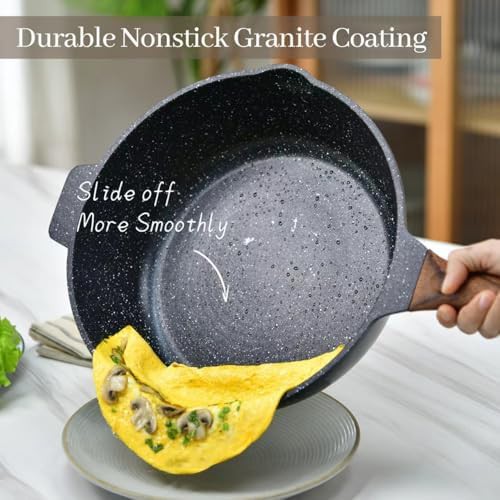
The pan also needs to handle sustained high heat without warping, and a pour spout makes it easier to drain oil when you are done. Nonstick surfaces in this slice are granite-style or standard nonstick, which release fried food cleanly. Induction compatibility matters if the pan will sit on a magnetic cooktop.
Forms and sizes for frying
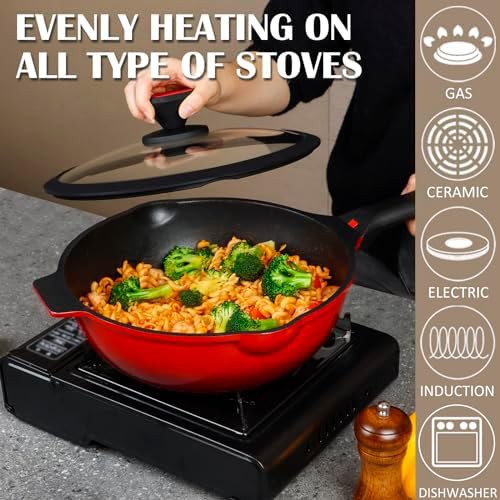
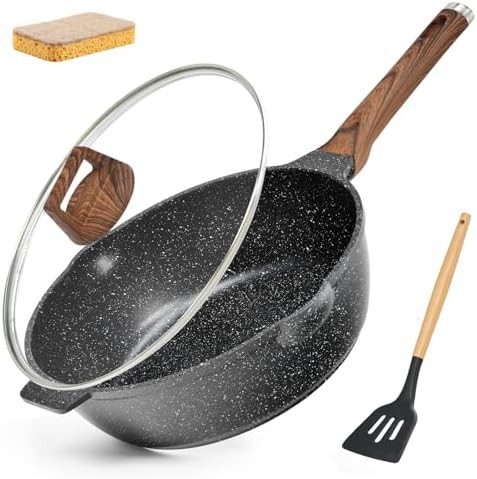
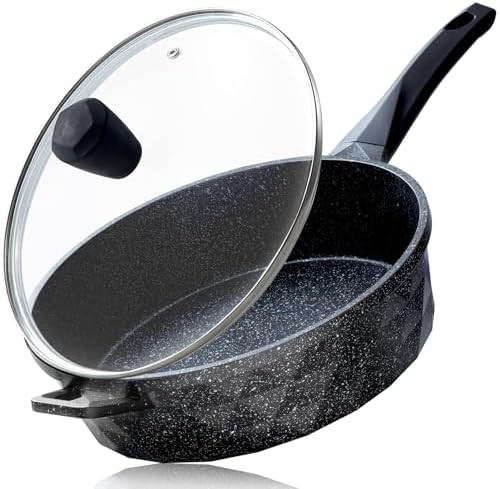
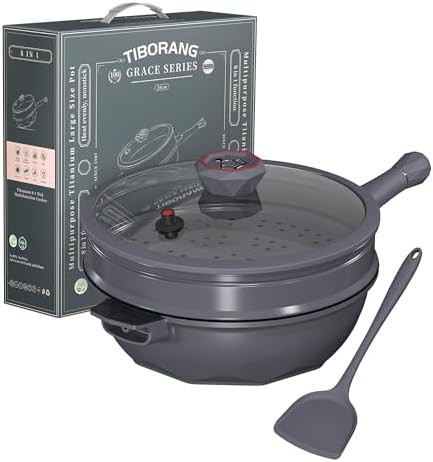
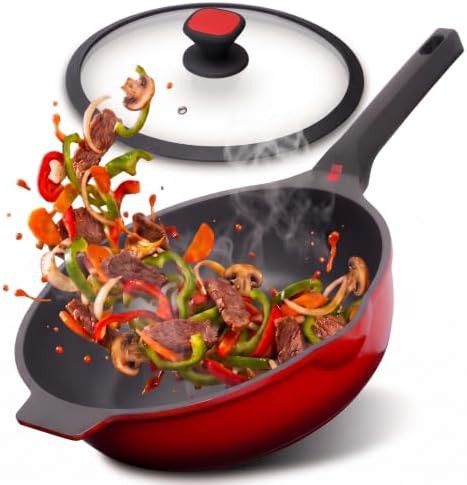
The selection includes a 12 inch, 5 quart deep pan in red with a silicone lid, a 12 inch, 6 quart jumbo saute pan with a pour spout and spatula, and a 12 inch, 5 quart pan with a granite nonstick surface. An 11 inch multipurpose pan also appears, which can double as a fryer and a saute pan. The 6 quart size gives the most oil capacity for larger batches.
A pour spout is a small feature that matters when you are trying to get used oil back into a container without coating the counter. Lids range from silicone to standard covers, and some sets include a spatula or scrub sponge. The red finish on one pan is the only color variation in this slice.
When a deep skillet is the wrong tool
A deep skillet uses more oil than a dedicated fryer, so if you fry often in large batches, the oil cost and disposal add up. The pan is also heavy when full, which makes lifting and pouring a two-hand job. For small batches of a few pieces, a shallower skillet or a saucepan uses less oil and is easier to handle.
 9.0